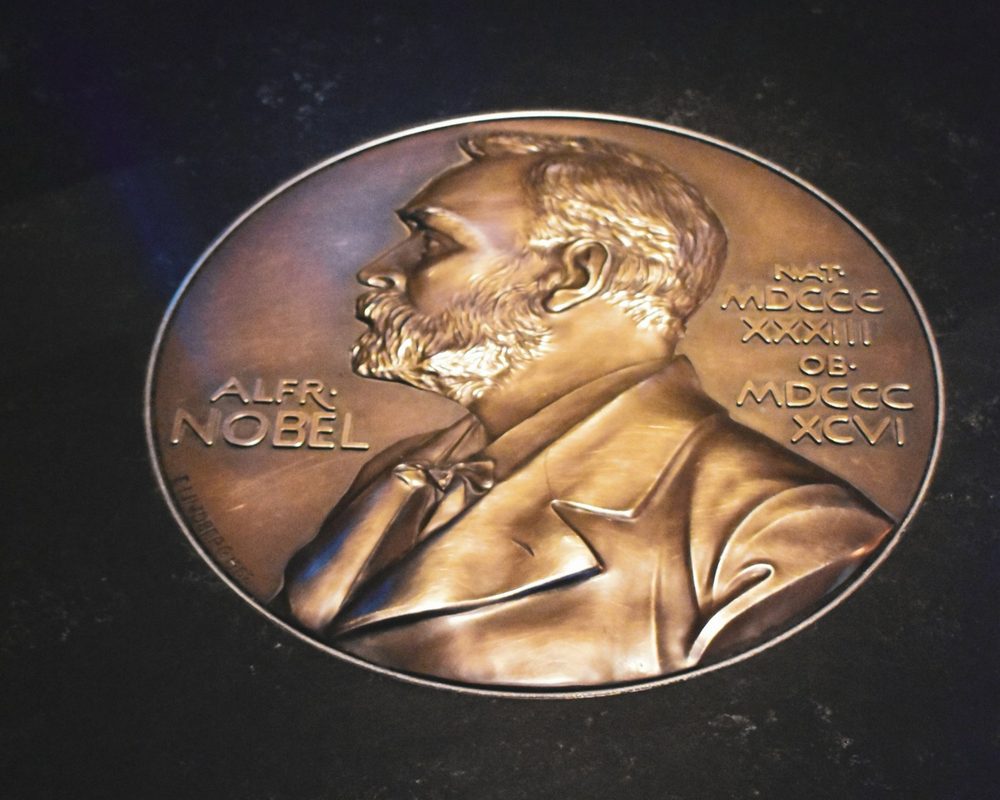
The Nobel Prizes are some of the world's most famous awards. This year's six prizes were announced between October 5 and October 12. Each is worth about $1.2 million, split when there's more than one winner.
For Muslim readers, the Peace Prize stands out. It went to Navi Pillay, the South African judge whose UN investigation found in 2025 that Israel committed genocide in Gaza. Here's a quick guide to every winner.
Physiology or Medicine: Karl Deisseroth, Peter Hegemann and Georg Nagel
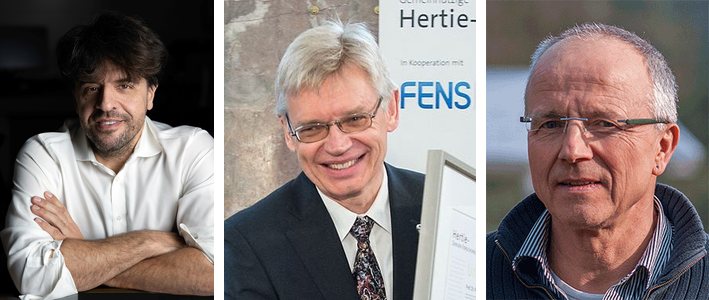
Who they are. Peter Hegemann (born 1954) and Georg Nagel (born 1953) are German scientists who study how living things react to light. Hegemann teaches neuroscience at Humboldt University in Berlin, and Nagel teaches plant biology at the University of Würzburg. Karl Deisseroth was born in Boston in 1971. He studied at Harvard and Stanford, where he earned both a medical degree and a PhD. He still works at Stanford, as an engineer and as a psychiatrist who sees patients.
Why they won. Together they found a way to control brain cells with light, called optogenetics. It started with a tiny green alga that swims toward light. Hegemann and Nagel found out why: the alga has a protein that opens like a gate when light hits it. In 2005, Deisseroth's lab put the gene for that protein into rat brain cells, and shining a blue light made those cells fire. Scientists could now switch specific brain cells on and off, and learn which ones control things like hunger, fear, memory and reward.
Physics: Francis Halzen
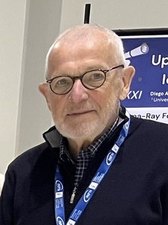
Who he is. Francis Halzen was born in Belgium in 1944 and studied physics at KU Leuven there. He has spent most of his career at the University of Wisconsin–Madison. He leads IceCube, a giant science experiment buried in the ice at the South Pole. He got the news at a science festival in Italy and joked that the prize might help get his next project funded.
Why he won. The prize is for IceCube and what it found. Neutrinos are tiny particles, sometimes called ghost particles, that pass through almost everything. Trillions go through your body every second, so catching one takes a huge detector. In 1988, Halzen suggested using the clear ice under the South Pole. Thousands of light sensors are now frozen deep in that ice, watching for the faint flash when a neutrino hits an atom. IceCube found the first neutrinos from outside our galaxy and traced one to a galaxy with a giant black hole at its center, giving astronomers a new way to study space.
Chemistry: Henri B. Kagan and Kenso Soai
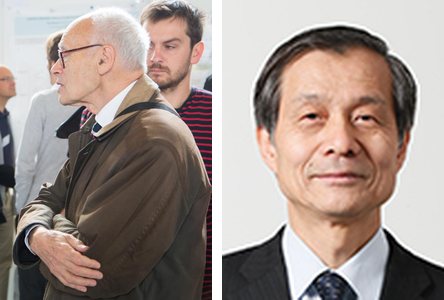
Who they are. Henri Kagan was born near Paris in 1930. At 95, he is one of the oldest Nobel winners ever. He spent his career at the Université Paris-Sud, just outside Paris. Kenso Soai was born in Hiroshima, Japan, in 1950. He studied at the University of Tokyo and taught at the Tokyo University of Science. He was grocery shopping when he heard he'd won, and a Japanese newspaper printed a special edition that sold out.
Why they won. Many molecules come in two mirror-image versions, like your left and right hands. The two versions can act very differently. One version of a molecule called carvone smells like mint, and the other smells like caraway. In a medicine, one version may heal while the other does harm. Living things use only one "hand," and nobody knew how that started. In 1986, Kagan showed that a helper molecule that is only partly one-handed can make something more one-handed than itself. Soai then found a reaction where the product helps make more of itself, so a tiny head start for one hand snowballs until almost everything is that hand. Chemists now rely on these ideas to make medicines.
Literature: Anne Carson
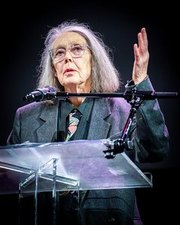
Who she is. Anne Carson was born in Toronto, Canada, in 1950. She learned ancient Greek as a teenager and later earned a PhD in classics, the study of ancient Greece and Rome. She has taught at universities in Canada and the U.S., including McGill, Michigan and NYU. In 2001 she became the first woman to win Britain's T.S. Eliot Prize for poetry. She plans to give her prize money away, partly to Doctors Without Borders.
Why she won. The Swedish Academy praised her "bold and inventive" work, which it said "has created new forms for contemporary literature." Carson takes old Greek stories and turns them into something new. Autobiography of Red retells a Greek myth as a novel written in poems, about a teenage boy in love. Nox, written after her brother died, came as one long folded page in a box. Her books are hard to label, and that's the point.
Peace: Navi Pillay
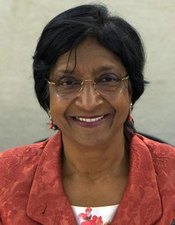
Who she is. Navi Pillay was born in Durban, South Africa, in 1941, to a working-class family of Indian descent. Under apartheid, South Africa's system of racial segregation, no law firm would hire her, so she opened her own. She defended anti-apartheid activists, and in 1973 she won political prisoners on Robben Island, where Nelson Mandela was held, the right to see lawyers. After apartheid ended, she became the first woman of color on South Africa's High Court. She later judged at the UN court for the Rwandan genocide and served as the UN's top human rights official from 2008 to 2014. From 2021 to 2025 she led a UN investigation into Israel and the occupied Palestinian territories. Today she sits on the International Court of Justice in a case accusing Myanmar of genocide against its Rohingya Muslims.
Why she won. The Nobel Committee honored her "for her efforts to promote peace and international law," calling her one of "the great defenders of international legal principles in our time." It pointed to the Rwanda court, the first to rule that rape can be an act of genocide, and warned that international law is "under attack." Many people also see the prize in light of her Gaza work. In September 2025, her UN investigation concluded that Israel had committed genocide there. Israel rejected that finding and opposed the prize. Pillay said she was "reeling with surprise" and dedicated the award to survivors.
Economic Sciences: Robert E. Hall and Michael Woodford
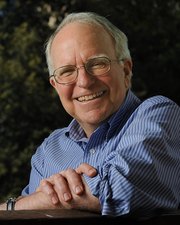
Who they are. Robert E. Hall was born in Palo Alto, California, in 1943. He studied at UC Berkeley, earned his PhD at MIT, and has taught at Stanford since 1978. Michael Woodford was born in Chicopee, Massachusetts, in 1955. He studied at the University of Chicago and Yale Law School before earning his own PhD at MIT, and now teaches at Columbia University.
Why they won. The prize was "for microeconomic foundations of macroeconomic stabilisation." In plain terms, it's about how governments and central banks can smooth out the economy's booms and busts, for example by cutting interest rates in a recession. In the 1970s those tools seemed to stop working: prices kept rising while jobs disappeared. Hall and Woodford rebuilt the models from the ground up, starting with how ordinary households and businesses plan for the future. A key idea is that when a central bank clearly explains its plans, people's expectations shift, and that alone helps steer the economy. Central banks around the world now use these models.